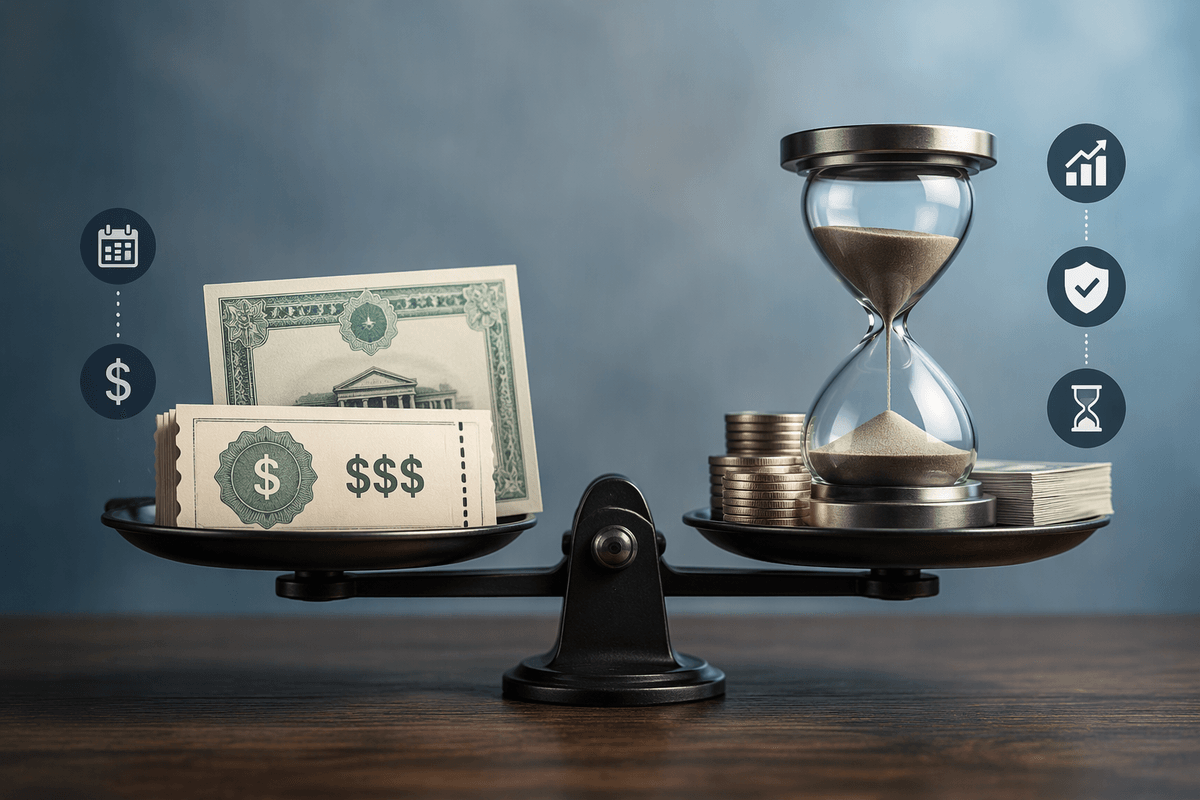
The profitable company that runs short on cash
A company can report a healthy profit while its bank balance becomes harder to manage. Customers may be slow to pay, inventory may absorb more money than expected, or debt repayments may arrive before new sales turn into cash. From the outside, the business still appears successful. Inside, management may be delaying hiring, reducing orders, or seeking short-term financing to cover ordinary bills.
That tension is why profitability alone cannot settle an investment decision. Net income records accounting profit over a period, while cash flow shows how much spendable money the business actually generated. The gap may be temporary, but it can also expose weak sales quality, aggressive accounting, or a business growing faster than its finances can support. Before trusting the profit figure, the next step is to examine what produced the sales.
Start with sales, but question their quality

Sales are usually the first sign of momentum, but the headline number says little about how dependable that momentum is. Revenue may rise because customers are buying more, yet it can also be lifted by price increases, one unusually large contract, heavy discounting, or sales made on generous credit terms. Each source creates a different financial burden. A company that collects cash immediately has more room to fund operations than one waiting months for invoices to be paid.
The quality of growth becomes clearer when sales are compared with customer payments, accounts receivable, and inventory. If revenue climbs 20% while unpaid invoices grow 40%, the company may be recording success faster than it is collecting money. Inventory that rises ahead of demand creates another risk: cash is tied up in products that may require discounts or write-downs later. Timing can distort a single quarter, so one weak comparison is not enough to judge the business. Repeated divergence, however, deserves attention before treating rising sales as evidence of durable growth.
When rising revenue fails to improve profitability
Even when sales are genuine and customers eventually pay, profitability can still move in the wrong direction. A company may be adding revenue through lower prices, higher marketing costs, expanded staffing, or expensive delivery commitments. The income statement then shows growth, but each dollar of sales contributes less after the costs required to produce and support it. A 15% increase in revenue paired with a 5% increase in operating profit may still be acceptable, but falling margins indicate that growth is becoming more expensive.
The pressure is often clearest in gross margin and operating margin. Rising material costs, wage increases, discounts, or an unfavorable product mix can reduce gross margin before overhead is considered. Management may respond by spending more on sales, technology, or new locations, keeping operating profit flat even as revenue reaches a record level. That investment could produce stronger returns later, but investors face a timing risk: the company must fund today’s expansion before the payoff is certain. Comparing revenue growth with margin trends over several periods helps separate deliberate investment from a business that is simply working harder to earn less.
Why net income can look better than reality
Margins can weaken gradually, but net income may still appear reassuring because it sits at the bottom of the income statement, after several items that do not reflect ordinary operations. A company might record a gain from selling property, benefit from a tax adjustment, or reduce expenses through a restructuring charge that will not recur. Those events can lift reported profit even while the underlying business is producing less from each sale.
Non-cash items create another gap. Depreciation and stock-based compensation reduce net income without using cash in the current period, while unpaid customer invoices can support reported revenue and profit before payment arrives. Interest expense also matters: a profitable operating business may leave little for shareholders once debt costs are included. Conversely, a temporary decline in interest or tax expense can make net income rise without any improvement in the business itself.
The practical test is consistency. Compare net income with operating income, diluted share count, and cash generated from operations across several periods. If earnings growth depends on one-time gains, falling taxes, or more shares being issued, the headline improvement deserves less weight. A stronger profit figure is useful only when the business—not just the accounting entries—has become more capable of funding itself.
Cash flow reveals what the business can fund

That distinction becomes more practical in the cash flow statement. Operating cash flow shows whether normal business activity is bringing in more money than it consumes. It starts with net income, then adjusts for non-cash charges and changes in working capital, such as unpaid invoices, inventory, and supplier bills. A positive figure suggests the core business is generating funding, but the trend matters more than one strong quarter.
Free cash flow goes a step further by subtracting capital expenditures needed to maintain or expand the business. This is the money potentially available for debt repayment, dividends, share buybacks, acquisitions, or a larger cash reserve. A company can report positive operating cash flow yet have little free cash flow because factories, data centers, equipment, or stores require heavy investment. That does not automatically make the stock unattractive, but it raises a timing and funding constraint: expansion may depend on borrowing or issuing shares before returns arrive.
Investors should also check whether cash flow is being supported by temporary working-capital changes. Delaying payments to suppliers can boost cash briefly, while collecting old invoices can flatter one period. Repeated operating cash generation, sensible capital spending, and manageable debt provide stronger evidence that growth can fund itself. Cash flow does not replace profit; it shows what that profit can actually pay for.
Read the three numbers as one evolving story
Viewed together, revenue, net income, and cash flow describe different stages of the same business process. Revenue shows demand being recorded, net income shows what remains after accounting costs, and cash flow shows whether that activity has produced money the company can use. The three figures should not match, but their direction should make sense.
A healthy pattern might be steady sales growth, stable or improving margins, and operating cash flow that follows earnings over time. A riskier pattern is revenue rising while margins shrink and cash flow stays weak, suggesting growth is consuming more resources than it creates. Temporary gaps can result from inventory purchases, delayed collections, or planned investment. The constraint is duration: if the mismatch persists, borrowing, share issuance, or spending cuts may become necessary. Reading the trend as one story narrows the question from “Is it growing?” to “What is that growth costing, and who is funding it?”
A compact checklist for buy, hold, or avoid
At the decision point, the checklist should stay short enough to use before the numbers blur together. Consider buying when revenue growth is supported by healthy margins, operating cash flow, and manageable investment needs. Holding may be reasonable when cash conversion is temporarily weak but the cause is identifiable, funding is available, and the trend is improving. Avoiding becomes more defensible when sales depend on rising unpaid invoices, net income repeatedly exceeds cash generation, or expansion requires continual borrowing or share issuance.
No single weak quarter settles the case. The constraint is persistence: repeated gaps between revenue, profit, and cash flow deserve more weight than an attractive valuation or one impressive earnings release.