The Bond Pays Six Percent—So What Will You Earn?
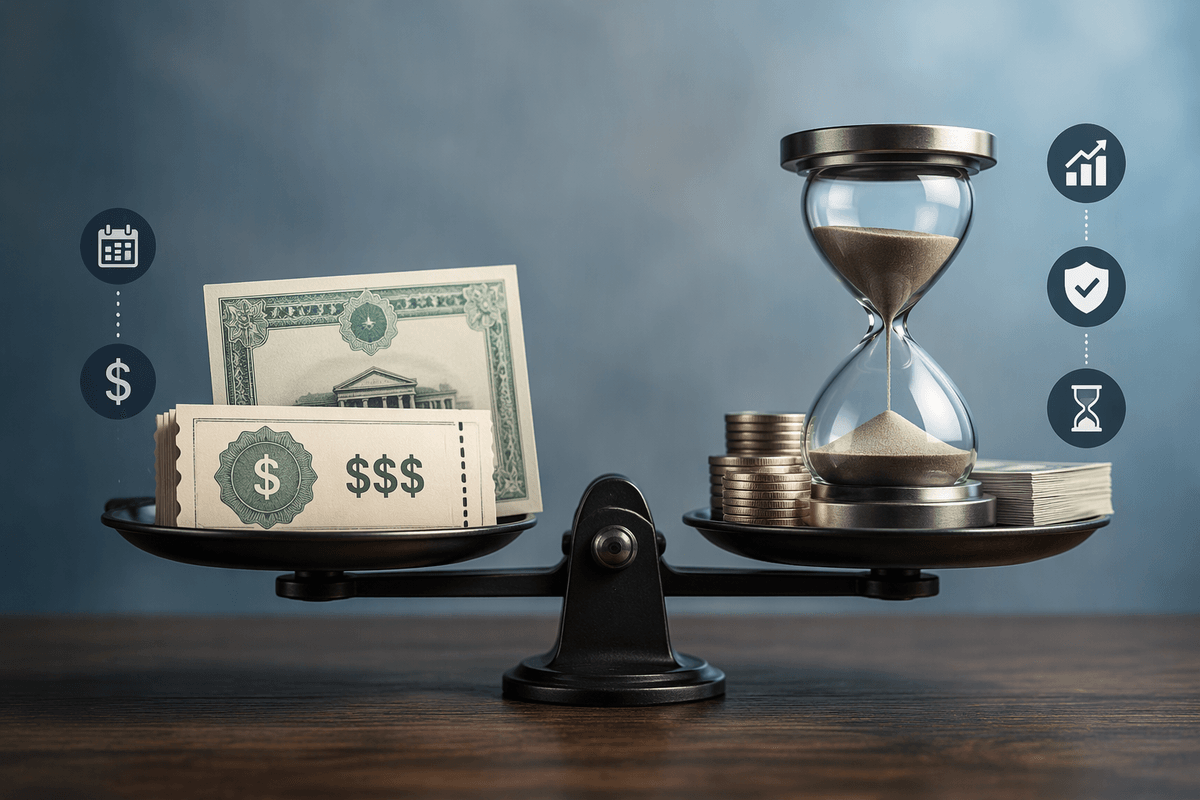
A bond advertisement says “6%,” and the number feels settled. Then the purchase screen shows a price above or below $1,000, and the expected return changes before the bond ever reaches maturity. The payment itself has not changed; the amount paid to receive it has. That gap is where many comparisons go wrong. A coupon rate describes the bond’s scheduled interest against its face value. Yield to maturity estimates the annual return from the current price through maturity, assuming scheduled payments arrive and can be reinvested at the calculated rate. Neither figure guarantees the result: taxes, defaults, early selling, and reinvestment risk remain real constraints.
Start With the Payment You Can See

The first figure to check is the coupon payment—the cash amount the bond is scheduled to send while it remains outstanding. A $1,000 bond with a 6% coupon pays $60 per year, usually split into two $30 payments. That amount is tied to face value, not to the price paid in the market. Buying the same bond for $1,080 still produces $60 a year, leaving less cash income relative to the money invested.
That makes the coupon useful, but limited. It shows the income stream before considering the purchase price, the repayment of principal, or the cost of waiting until maturity. It also says nothing about whether the issuer will make every payment; a high coupon can reflect greater credit risk rather than a better bargain. Taxes and transaction costs can reduce the amount that actually reaches the account, while selling early may produce a gain or loss unrelated to the scheduled payment. The coupon is therefore the visible starting point, not the return being purchased.
Then Price the Return You Are Actually Buying
The missing calculation starts with the market price. Yield to maturity treats the bond as a package: the interest payments received, the $1,000 principal returned at maturity, and the gain or loss created by buying above or below face value. A bond purchased for $1,080 with a 6% coupon still pays $60 annually, but the investor also faces a $80 decline by maturity if the issuer repays only $1,000. That difference pulls the yield below 6%.
For a bond bought at $940, the same payment stream works in the opposite direction. The investor receives $60 each year and may also gain $60 as the price moves toward the $1,000 repayment value, so the yield to maturity can exceed the coupon rate. The calculation is more useful than the coupon for comparing prices, but it is not a promise. It generally assumes the bond is held to maturity, every payment arrives on schedule, and interim interest can be reinvested at the stated yield. Those assumptions can fail when rates change, cash is needed early, or the issuer’s credit weakens. Taxes, trading costs, and a callable feature can also make the realized return differ from the quoted figure. Yield to maturity prices the planned outcome, not every outcome.
Premium, Discount, or Par: The Numbers Shift
Once the price is included, the label attached to the bond matters. A premium bond costs more than its face value, so its fixed coupon has to compensate for a future principal repayment that is smaller than the original investment. A $1,080 purchase of a $1,000 bond creates an $80 capital loss at maturity, assuming the issuer pays as promised. That loss does not appear in the coupon payment, but it weighs directly on yield to maturity.
A discount bond reverses the pressure. Paying $940 for the same $1,000 claim creates a potential $60 gain by maturity, which supplements the scheduled interest and can lift the yield above the coupon rate. At par, the purchase price and repayment value match, so the coupon and yield to maturity are often close, before fees, taxes, and reinvestment effects. The distinction is useful, but the price is not the only uncertainty. A bond bought at a discount may carry higher credit risk, while a premium bond may be called before maturity, preventing the investor from collecting the expected payments. Comparing the price category with the issuer’s credit quality and call terms gives the yield figure some necessary context.
Which Number Helps When Bonds Compete?
When two bonds have different prices, coupon rate alone can make the higher-paying bond look better. Yield to maturity usually gives the cleaner comparison because it puts purchase price, scheduled income, and repayment value on the same basis. A 6% bond bought at a premium may produce less than a 5.5% bond bought near a discount if the second bond offers more principal appreciation by maturity. The comparison only works when the bonds have similar maturity dates, credit quality, payment schedules, and call features.
That last condition creates practical friction. A quoted yield to maturity assumes the bond survives until maturity, while a callable bond may be repaid early when rates fall. In that case, yield to worst—or the lowest return under specified call or maturity outcomes—may be more relevant. Credit risk also limits the usefulness of a headline yield: a higher figure can simply compensate for a greater chance of delayed or missed payments. Coupon identifies the cash payment; yield measures the priced return, but neither removes the need to compare the terms producing it.
A Higher Yield Still Comes With Conditions

A higher yield can improve the comparison, but it does not erase the reason the bond is offering more. The extra return may reflect a longer maturity, weaker credit, a less liquid market, or a price that has fallen because investors expect trouble. A 7% yield on a financially strained issuer is not automatically better than a 5.8% yield from a stronger one. The possible loss of principal can outweigh years of additional interest.
Even a sound issuer leaves timing risk. Yield to maturity assumes the bond is held until its final date and that each interest payment can be reinvested at the quoted rate. Selling after rates rise may force a market loss, while falling rates can reduce reinvestment income. Taxes and trading costs further reduce the amount kept. A higher yield is useful evidence, but only after its assumptions and the risks behind it are visible.
Use Both Figures Before You Buy or Hold
Before buying or holding, read the coupon as the payment schedule and yield to maturity as the return implied by today’s price. Then test whether the quoted yield matches the situation: a callable bond may end early, a weak issuer may not make every payment, and selling before maturity can turn an expected gain into a loss. Fees, taxes, and reinvestment results can also shrink the return shown on screen.
Using both figures narrows the decision without making it certain. The coupon tells you what cash may arrive; the yield shows what that cash and the principal repayment are worth together. Neither is sufficient alone, but viewed with price, maturity, credit quality, and call terms, they make the bond’s apparent return easier to judge.