When Two Incomes Stop Feeling Like One
At the end of a strong month, the account balance can make two incomes look comfortably dependable. Then a client pays late, quarterly taxes come due, or software and equipment costs land together. The salary still arrives on schedule, but the freelance money has already been absorbed into ordinary spending. That is when the household starts feeling tighter than the total income suggests.
The salary should be treated as the dependable base; freelance payments are variable money with obligations attached. Taxes, business costs, and slower months claim part of every payment before it becomes available for personal use. Without that separation, a good month quietly raises spending and a weak month turns routine bills into a scramble.
Build Your Life Around the Paycheck
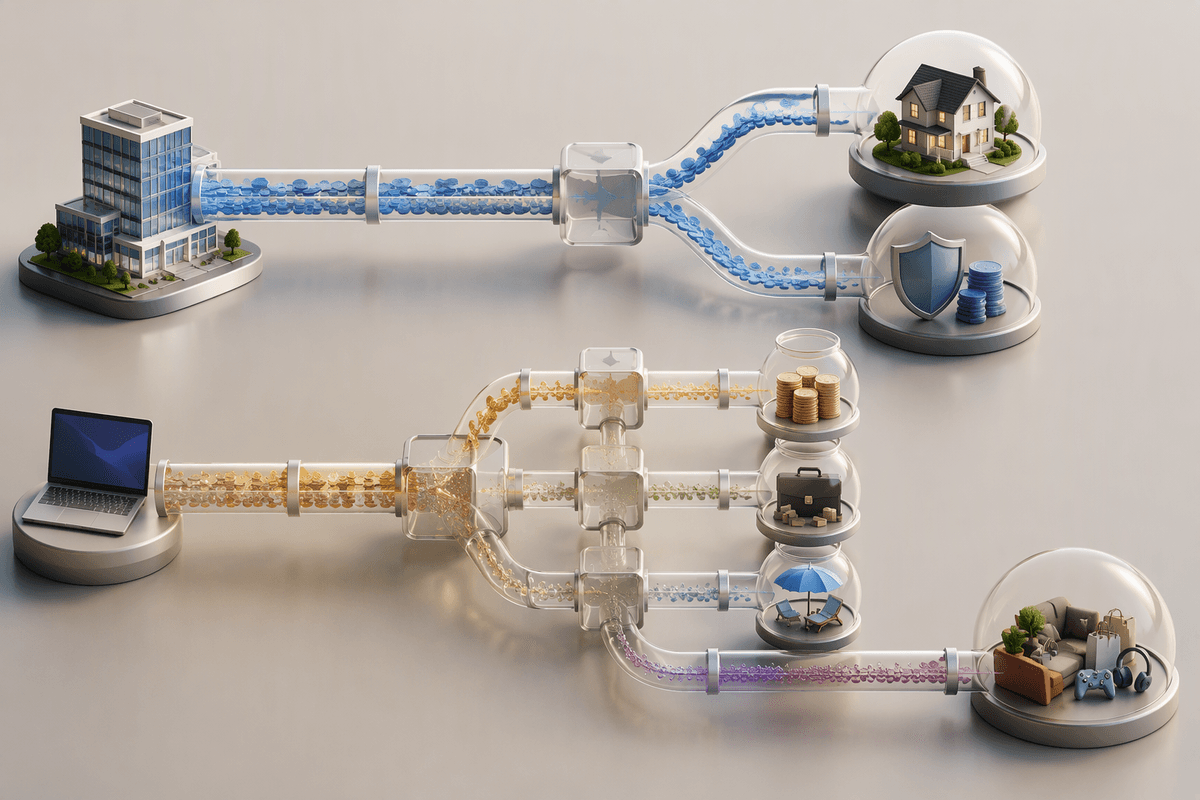
That separation becomes practical when the regular paycheck carries the household’s normal life. Rent, utilities, groceries, insurance, debt payments, and planned saving should fit within the salary that arrives on a known schedule. If those commitments require freelance income every month, the budget is relying on money that may arrive late, shrink, or disappear for a season.
Start with the lower, dependable number rather than the household’s best month. A paycheck-based budget may feel conservative, especially when freelance work is active, but it removes pressure from uneven cash flow. It also makes shortfalls easier to see: if the salary does not cover a recurring bill, the answer is usually to reduce the commitment, redirect a reserve, or change the income plan—not to assume the next client payment will arrive on time.
Freelance money can still support important goals, but it should not quietly become part of the monthly baseline. Until taxes, business costs, and a buffer for slow periods are funded, the payment is not fully available for spending. That rule may delay a purchase or limit lifestyle upgrades, yet it keeps one late invoice from disturbing the bills that the paycheck was meant to protect.
Treat Every Freelance Payment as Unfinished Money
That caution has to continue after the payment reaches the account. A $3,000 freelance deposit is not $3,000 of spending money. Part may belong to the tax authority, part may repay software, supplies, travel, or contractor costs, and part may need to remain available for a month with no new work. Spending the full amount because the balance looks high creates a problem that may not appear until weeks later.
A practical approach is to move each payment through separate holding places before using any of it personally. Set aside the estimated tax amount first, then cover known business expenses and add to a reserve for slow periods. Only the remainder is available for personal goals, extra debt payments, or discretionary spending. The percentages will depend on the work and tax situation, but the order matters more than perfect precision. Waiting until tax season to discover that the money was already spent turns a manageable obligation into a cash emergency.
This also changes how strong months feel. A large invoice can improve the financial position without immediately improving the lifestyle. That may feel restrictive when work is flowing, but it preserves choices when a client pauses, equipment fails, or an expected payment arrives late. Freelance income becomes useful precisely because it is handled as money with a job still waiting to be assigned.
Give Variable Income Separate Jobs
Once the payment has been divided, the remaining money still needs a clear destination. Keeping everything in one general balance makes it easy to spend a reserve on a weekend away or mistake a tax holding account for available cash. Separate accounts, labeled savings buckets, or a simple tracking sheet can give each portion a visible job: taxes, business costs, slow-month reserves, and personal goals. The method matters less than being able to see what is committed and what is genuinely free.
Those jobs should also follow a sensible order. Tax money and near-term business expenses come first because missing them creates penalties, interest, or disruption to the work itself. The slow-month reserve comes next, especially when freelance income covers irregular but important costs. Only after those needs are funded should money move toward travel, larger purchases, investing, or extra debt payments. A common constraint is that one payment may not be large enough to fund every category fully. In that case, partial funding is still useful if the priorities stay consistent. The goal is not to make each month feel generous; it is to stop one strong invoice from being spent five different ways before its obligations have been met.
Use Reserves When Freelance Work Goes Quiet

When freelance work goes quiet, the reserve should replace the missing income without changing the household’s basic plan. Transfer only what is needed to cover the gap, rather than treating the entire balance as newly available cash. If the salary still covers rent, food, and utilities, the reserve may only need to handle business costs, taxes already set aside, or a planned irregular bill. That keeps the money from disappearing faster than the work does.
A useful reserve has a defined purpose and a replenishment rule. One account might cover personal spending during a slow period; another can protect software, insurance, equipment repairs, or other costs needed to keep working. Set a rough time limit for withdrawals, such as reviewing the plan after two or three months without a payment. The constraint is that reserves are not unlimited: using them for ordinary upgrades can leave nothing for a genuinely dry stretch. When new freelance money arrives, restore the reserve before increasing discretionary spending. That turns a quiet period into a planned drawdown instead of a financial surprise.
Stop Strong Months From Raising Your Lifestyle
After a quiet period, a strong freelance month can feel like permission to spend freely. That reaction is understandable, but it can rebuild the same pressure the reserve was meant to prevent. Keep the household’s regular costs tied to the salary, and treat the first payments after a slow stretch as recovery money. Replenish taxes, business expenses, and the reserve before adding new monthly commitments.
Even when several strong months arrive, avoid turning irregular income into permanent bills. A larger payment can fund a planned purchase or a one-time extra debt payment, but a new lease, subscription, or recurring expense remains after the work slows. The constraint is timing: lifestyle costs are difficult to reverse quickly, while freelance income can change next month. Stability often comes from letting strong months improve the buffer rather than expand the baseline.
Review the System Before the Numbers Drift
A system that works in January can quietly fail by summer. A salary increase, higher software costs, a new debt payment, or several late invoices may shift the balance without making the change obvious. Set a short review each month to compare the dependable paycheck with recurring commitments, then check whether freelance money is keeping pace with taxes, business costs, and reserves.
Look for drift rather than perfection. If withdrawals from the slow-month reserve are becoming routine, personal spending may be too high or freelance work may no longer support its assigned goals. Adjust before the account reaches zero: reduce commitments, increase withholding, or delay discretionary plans. The review takes time, but correcting a small gap is easier than repairing a missed tax payment or depleted reserve.