Your Recent Spending May Tell Two Stories
At the end of the month, a bank statement can look convincing until one charge changes the whole picture. A car repair, annual insurance payment, or unusually social weekend may make recent spending appear higher than it normally is. The opposite can happen after a quiet month, when fewer bills or postponed purchases create false confidence. Treating either snapshot as a standing rule can leave too little room for ordinary surprises.
Look at the last three months together before deciding what belongs in a monthly budget. Separate regular bills from irregular costs and discretionary purchases, then note which expenses were unusual rather than pretending they will disappear. That comparison gives a more honest starting point for the categories and trade-offs ahead.
Start With the Full Three-Month Picture
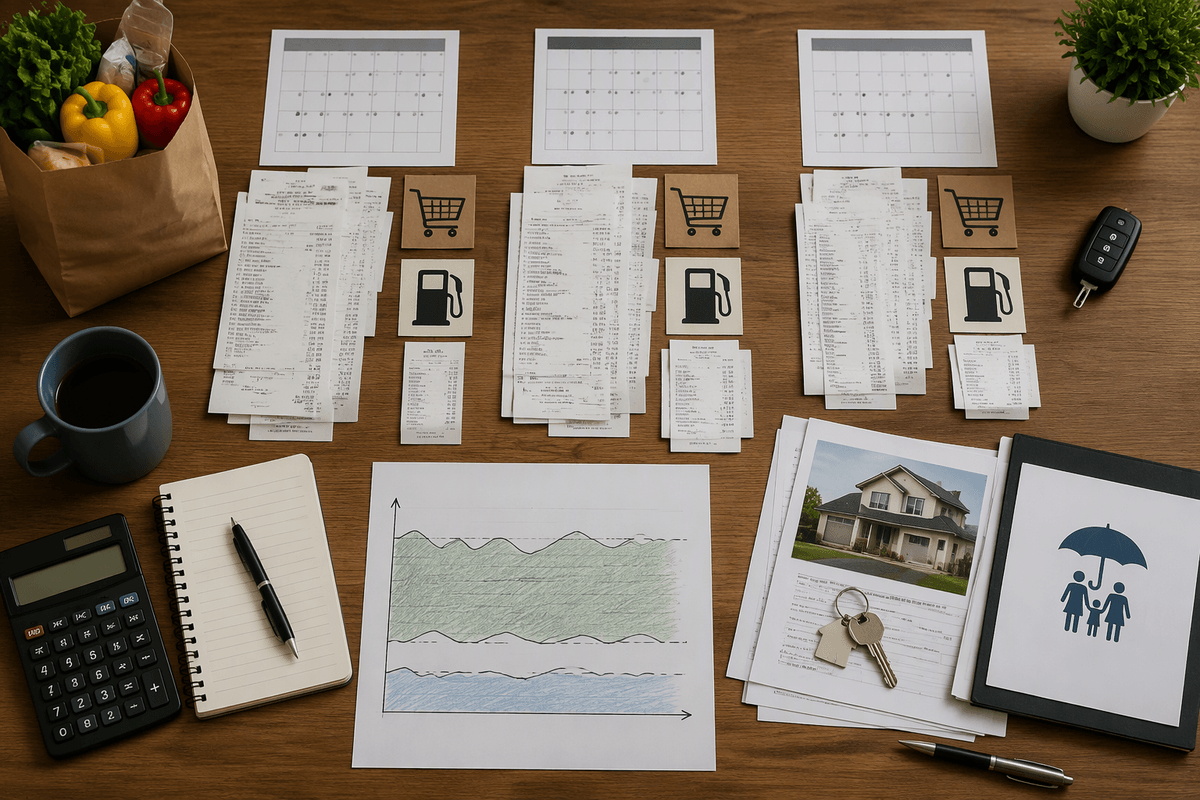
Put the three statements side by side and trace each payment to a category before changing any limits. Start with housing, utilities, debt payments, food, transportation, insurance, and other costs that appear repeatedly. Then mark expenses that occur only once or twice, such as medical bills, school fees, gifts, repairs, or travel. Their timing matters: leaving them out creates a budget that works only until the next large charge arrives.
For each category, compare the monthly amounts rather than relying on one total. A grocery bill that rises in one month may reflect hosting guests, while a lower transportation cost may follow a week of working from home. Keep those differences visible, and calculate a workable range when the pattern is uneven. The goal is not to force every month into the same shape. It is to see which costs repeat, which costs need a monthly reserve, and which spending can be reduced without creating a new shortfall.
The Average Can Hide an Expensive Exception
Once the ranges are visible, the next trap is treating the average as if it were a promise. Suppose transportation cost $220, $245, and $610 across the three months. The average is about $358, but that figure does not describe a normal week or explain what caused the jump. A brake repair, airport trip, or temporary loss of access to a car may have produced the highest month. Using the average as a fixed limit could make ordinary months look wasteful while still failing to prepare for the expense that actually matters.
Keep the exception in the record, then decide how it should affect the budget. If the cost was genuinely one-time, leave the regular category near its usual range and create a separate reserve for repairs, medical bills, or annual payments. If similar charges appear every few months, divide the likely yearly total by twelve instead of waiting for the next large withdrawal. Timing creates a real constraint: setting aside $75 a month may feel unnecessary until a $900 bill arrives, but absorbing that bill from a single month’s income can disrupt rent, debt payments, or planned savings. The useful number is not always the average; it is the amount needed to keep an unusual but foreseeable cost from becoming a crisis.
Which Costs Are Truly Nonnegotiable?
After separating true one-time expenses from recurring reserves, the next judgment is less obvious: which costs must be paid before anything else can happen? Rent or a mortgage, basic utilities, insurance, minimum debt payments, medication, and the transportation needed to keep working usually belong in that first group. Their amounts may vary, but skipping them carries a direct cost, such as late fees, service loss, damaged credit, or lost income.
Not every familiar expense deserves the same protection. A larger grocery bill may include convenience purchases, and a phone plan may have features that could be reduced without affecting daily life. Review each category by asking what happens if it is delayed, lowered, or removed for one month. Keep the essential portion separate from the flexible portion rather than labeling the entire transaction nonnegotiable. Timing also matters: an annual insurance premium may not be urgent this week, but the money is still committed. If essentials already consume nearly all available income, the budget cannot solve that gap through minor cuts; it may require changing a bill, adding income, or delaying savings targets.
Build a Baseline Before Cutting Anything
With the essential portion identified, write down the amount needed to keep a normal month running before reducing anything. Use the lower end of a stable range only when the past three months support it; otherwise, choose a figure that reflects actual use. For groceries, transportation, and utilities, a baseline may need to sit above the cheapest month because unusually low spending is not always repeatable. Include monthly amounts for irregular costs as well, even when no payment appeared in the statements.
Then compare that baseline with reliable take-home income, not with an optimistic month or a temporary bonus. The difference shows what is available for flexible spending, debt reduction, and savings. If the numbers leave only $40 after necessities, assigning $300 to savings will create a shortfall rather than progress. Keep the first version descriptive: record what the current pattern requires, including its inconvenient parts, before deciding what to change. Cutting too early can hide the real pressure, especially when a category is high because of a recurring obligation rather than careless spending.
What Changes When the Numbers Do Not Fit?

When the baseline is higher than reliable income, the figures are not asking for a more disciplined spreadsheet. They are showing a mismatch that needs a decision. First check whether the gap comes from timing, such as an annual bill or recent repair, or from a cost that repeats every month. A temporary spike may call for a reserve; a permanent shortfall requires a different response.
Work through the choices in order. Reduce flexible spending only where the past three months show room to do so, then review subscriptions, service plans, debt terms, insurance costs, and other bills that may be changed. If the gap remains, pause new savings targets rather than funding them with credit or skipped essentials. The constraint is uncomfortable but useful: not every goal can continue at its planned amount when income is already committed. A budget may need a smaller savings contribution, a slower debt payoff, or additional income until the underlying numbers improve. That is not failure in the budget; it is information about what the current month can actually support.
Treat the First Budget as a Testable Starting Point
Set the first budget for one month, then treat it as a test rather than a verdict. Track what actually happens, especially in categories built from uneven three-month patterns or monthly reserves for annual costs. A grocery limit that looks reasonable on paper may fail during a busy week, while a transportation allowance may prove unnecessarily high. Record the difference without quietly moving money between categories.
At month-end, compare the plan with the transactions and adjust only where the evidence supports it. The constraint is timing: one unusual bill can distort the review, so avoid rebuilding everything after a single surprise. After two or three cycles, the budget should feel less like a prediction and more like a working map—clear enough to guide savings and recurring commitments without pretending uncertainty has disappeared.